
Client management software for freelancers and studios
Moolamochi connects the client relationship, the agreed scope, the work and its invoices without treating them as the same thing.
Relationships carry the context
Record a contact’s source, permissions, next action and opportunity before preparing an estimate. Connected Gmail or Microsoft 365 mail stays subject to the mailbox owner’s sharing permissions. Forecast value remains separate from invoiced and collected money.
Delivery follows an agreement
Accept a versioned estimate, complete required signatures and prepare the linked invoice. Generate approved service work deliberately, then use the same leaves in the board or list. A changed brief becomes a client request and a reviewed commercial proposal.
One connected project. Separate decisions.
- The agreement
- Approved scope defines the work. A proposed addition is not part of that agreement yet.
- The invoice
- Issued money keeps its history. Additions go through a separate financial review.
- The delivery
- The client reviews the current published version. A payment does not finish its tasks.
Money keeps its own history
An issued invoice keeps its original legal details and amounts. Later approved additions can create a supplementary draft; credits and refunds have their own records. Paying an invoice does not approve a deliverable or complete its tasks.
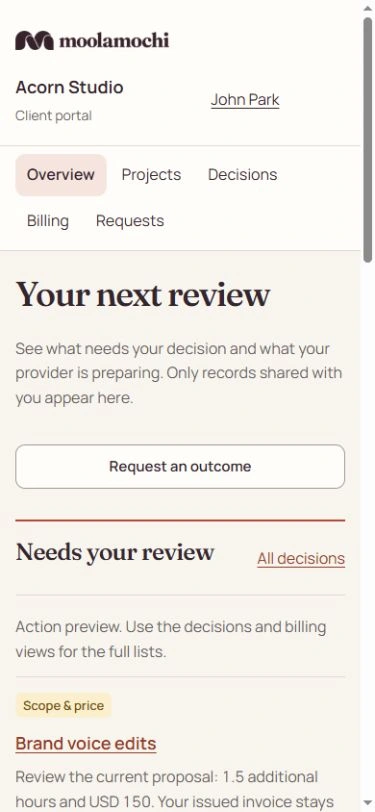
Open the full-size image to inspect the controls. Your available actions depend on the record’s state and your explicit permissions.
See the steps before you act.
Watch a silent recording of the actual interface, with captions and written steps.
Open the complete Help Center guideWatch the walkthrough and read the steps
Approve added scope without rewriting an invoice
Who acts: Client requester → assigned provider → named commercial approver → Finance
Turn an outcome request into a versioned proposal, then keep its new work and supplementary draft separate from the issued original.
Go straight to the steps
Playback and accessibility
Use Play or Pause, move back or forward 10 seconds, or restart from the title screen. Tab to a button, then press Enter or Space. Action captions are included in the video, and the complete written steps follow below.
Download the action captionsGo straight to the written stepsPrepare the client’s outcome request
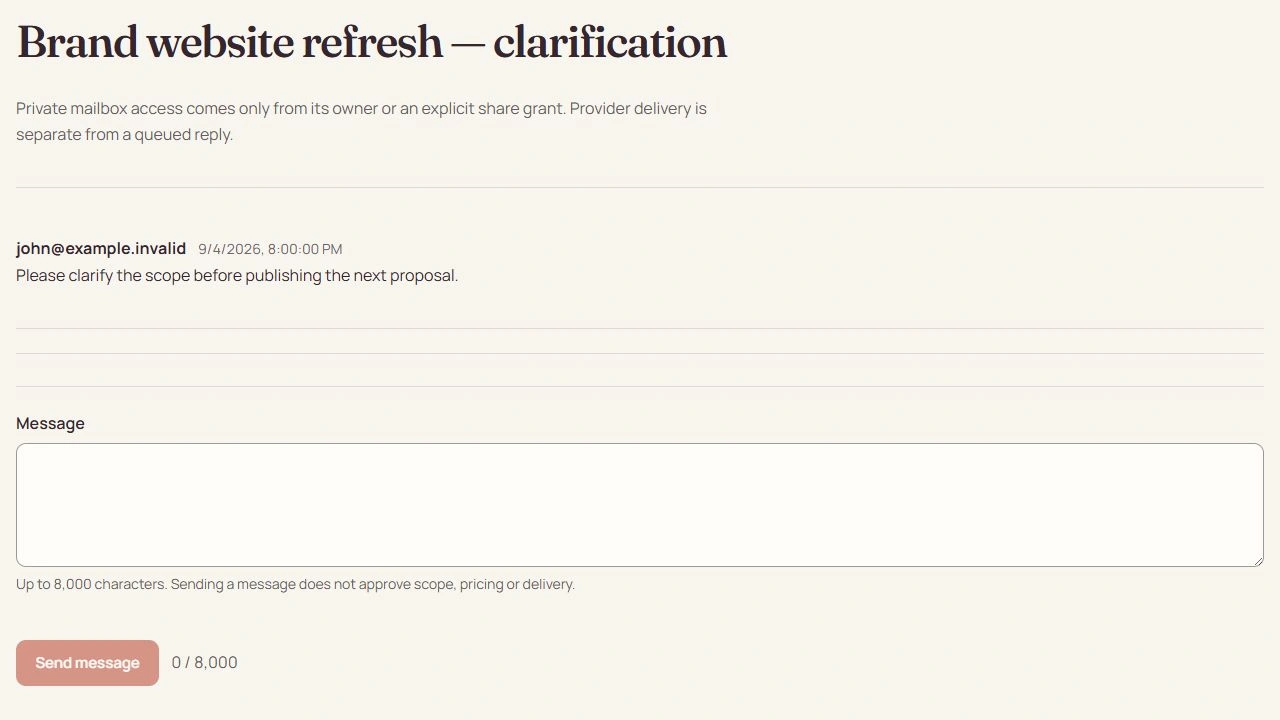
The recording types Brand voice edits and its context in the native client request form, stopping before Submit request. In your assigned project, select the requested outcome and submit it for provider assessment. A request is not a price or commercial consent.
Review the provider’s planned effort
The recording edits planned duration and settles on 1.5 hours. The provider must also select the linked invoice and named commercial approver, review scope and the $100 hourly rate, then save and publish the complete +$150 proposal against the current baseline. No proposal is saved or published in the recording.
Review the exact commercial consent
The designated client compares Scope comparison, Baseline revision and Proposal version, then checks the exact-version acceptance confirmation to enable Accept scope and price. The recording stops before submission. Reject proposal has its own confirmation and leaves approved work and money unchanged. If the version changes, reload and compare again. Internal owners cannot decide for the client.
Inspect the illustrative post-approval work
The post-approval demonstration shows Brand voice edits in Backlog, 14 approved hours and 8.5 hours complete: 61%. An accepted current proposal creates its work once; approval does not complete it.
Preserve the original and review the supplement
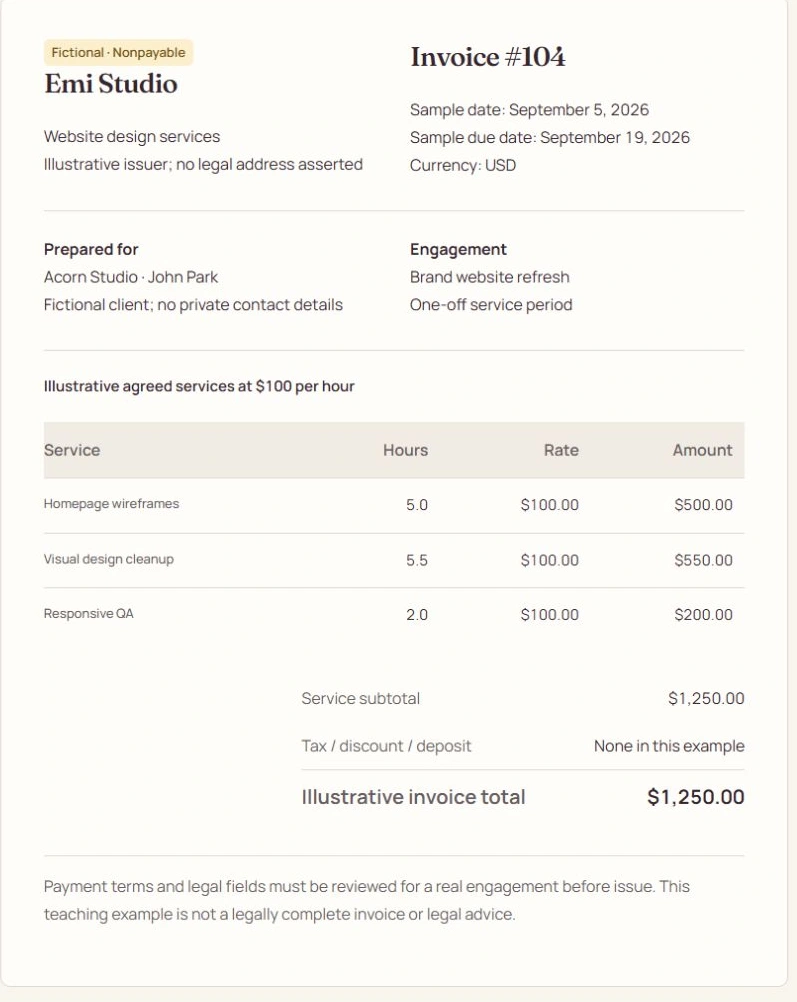
The recording reviews the issued original’s permitted actions without a money-edit action. Invoice #104 remains $1,250; Auto-adjust hours is a disabled Saved setting, not an editable issued-hour control. After real approval, Finance separately reviews and issues the linked $150 supplementary draft. Until issue, it is not an outstanding receivable. Negative scope uses a credit draft for Finance review.
What changes when you finish
One approved scope revision, one new work item and one $150 supplementary draft. The issued $1,250 original is unchanged.